
What Is Prompt Engineering? A Practical Guide for Getting Better Results from AI
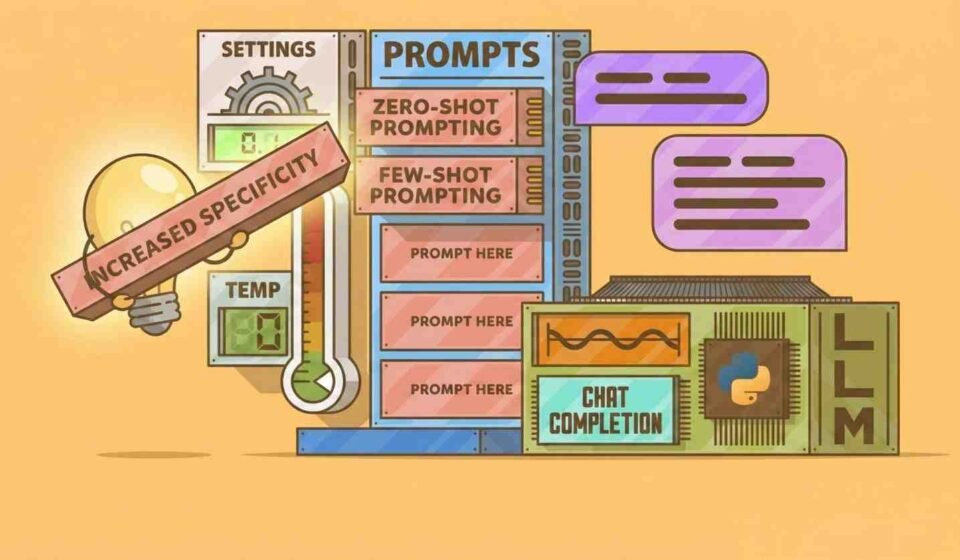
Prompt engineering is the skill of designing clear, structured inputs (prompts) that guide AI models—especially large language models (LLMs)—to produce accurate, useful, and reliable outputs. As AI tools become part of daily work across writing, coding, analysis, design, and support, the quality of your prompts often determines the quality of the results.
Table Of Content
- Why Prompt Engineering Matters
- What a Prompt Really Contains
- Basic vs Engineered Prompt (Example)
- Core Prompt Engineering Techniques
- Role Prompting
- Few-Shot Prompting (Show Examples)
- Step-by-Step Instructions
- Output Formatting
- Constraints to Reduce Errors
- Context Injection
- Real-World Prompt Examples
- Common Prompt Engineering Mistakes
- Advanced Techniques (When You’re Ready)
- Prompt Engineering for Different Roles
- A Simple Prompt Checklist
- The Future of Prompt Engineering
- Final Thoughts
In simple terms:
Better prompts → better AI outputs
This article explains what prompt engineering is, why it matters, core techniques you can use immediately, common mistakes, and real examples you can adapt to your work.
Why Prompt Engineering Matters
AI models don’t “think” like humans. They predict the most likely next tokens based on patterns learned from data. If your prompt is vague, the output will be vague. If your prompt is precise, the output becomes precise.
Prompt engineering helps you:
Reduce hallucinations and irrelevant answers
Get structured outputs (tables, JSON, steps, code)
Control tone, format, and depth
Save time by avoiding repeated corrections
Turn AI into a reliable assistant rather than a guessing machine
What a Prompt Really Contains
A strong prompt usually has these parts:
Role – Who the AI should act as
Task – What you want it to do
Context – Background information
Constraints – Rules to follow
Output format – How the result should be structured
Template:
You are a [role].

Your task is to [task].

Context:
[relevant background]

Constraints:
- Rule 1
- Rule 2

Output format:
[exact structure you want]
Basic vs Engineered Prompt (Example)
Basic prompt:
Write about AI in business.
Engineered prompt:
You are a business technology consultant.
Write a 600-word article explaining high-value AI use cases for mid-sized companies.
Include examples from customer support, finance, and operations.
Use simple language and bullet points.
End with a practical checklist.
The second prompt gives dramatically better results because it removes ambiguity.
Core Prompt Engineering Techniques
Role Prompting
Assign a role to guide tone and depth.
“Act as a senior Python developer…”
“Act as a cybersecurity analyst…”
“Act as an SEO content writer…”
Few-Shot Prompting (Show Examples)
Provide examples of what you want.
You are a [role].

Convert text to JSON.

Example:
Input: John, 25, London
Output: {"name":"John","age":25,"city":"London"}

Now convert:
Input: Alice, 30, Paris
Step-by-Step Instructions
Break complex tasks into steps.
Analyze the problem step by step.
Then provide the final answer.
Output Formatting
Tell the AI exactly how to respond.
Return the answer as a markdown table.
Return valid JSON only.
Provide bullet points only.
Constraints to Reduce Errors
Add rules to prevent hallucination.
If information is unknown, say “Not enough data.”
Do not assume facts not provided.
Use only the data in the context.
Context Injection
Provide data the AI should rely on.
Paste documents, code, logs, or requirements directly into the prompt so the model doesn’t guess.
Real-World Prompt Examples
For Writing
You are a [role].

You are an SEO content writer.

Write a blog post about prompt engineering for beginners.
Use headings, short paragraphs, and examples.
Word count: 800.
Tone: simple and practical.
For Coding
You are a Python developer.

Write a function that validates email addresses.
Add comments.
Return test cases.
For Data Analysis
You are a data analyst.

Given this CSV data:
[paste data]

Find trends and present insights as bullet points.
For Customer Support
You are a support agent.

Draft a polite reply to this complaint.
Tone: empathetic and professional.
Keep it under 120 words.
Common Prompt Engineering Mistakes
| Mistake | Problem | Fix |
|---|---|---|
| Being vague | Generic output | Add role, task, constraints |
| No format specified | Messy response | Define output structure |
| Too much in one prompt | Confused results | Break into steps |
| No context | Hallucinations | Provide data |
| No constraints | Wrong assumptions | Add rules |
Advanced Techniques (When You’re Ready)
Chain-of-thought prompting – Ask for reasoning steps
Self-critique prompting – Ask AI to review its own answer
Iterative prompting – Refine output in multiple rounds
Tool-aware prompting – Ask for code, JSON, or structured artifacts
Prompt Engineering for Different Roles
| Role | How Prompt Engineering Helps |
|---|---|
| Developers | Generate correct code, tests, refactors |
| Writers | Control tone, structure, SEO |
| Analysts | Structured insights from raw data |
| Managers | Summaries, plans, documentation |
| Support Teams | Consistent, high-quality replies |
A Simple Prompt Checklist
Before sending a prompt, check:
Did I define the role?
Did I clearly state the task?
Did I add context?
Did I add constraints?
Did I define the output format?
If yes, your result quality will be much higher.
The Future of Prompt Engineering
As AI tools evolve, prompt engineering is becoming a core digital skill—similar to learning how to search effectively on Google 15 years ago. People who know how to communicate with AI clearly will work faster, write better, code smarter, and make fewer mistakes.
Prompt engineering is not about tricking AI.
It’s about communicating with precision.
Final Thoughts
Prompt engineering turns AI from a novelty into a dependable partner. Whether you are writing, coding, analyzing data, or automating workflows, the way you ask determines what you get.
Start simple:
Role → Task → Context → Constraints → Format
Master this pattern, and you’ll unlock the real power of AI.