

Claude Opus 4.6 Explained: 1M Context AI Model Built for Agentic Coding, Long Reasoning, and Professional Workflows
Anthropic has introduced Claude Opus 4.6, its most advanced AI model designed not just to answer questions, but to work like an autonomous collaborator. This model is built for tasks that require planning, multi-step reasoning, document handling, coding, research, and extended context understanding.
Unlike traditional AI responses that focus on single replies, Opus 4.6 is optimized for long sessions of work, where the model must remember, reason, act, and refine its approach over time.
This release marks a major step toward AI systems that function as agents, rather than chatbots.
Built for Agentic Work, Not Just Responses
Claude Opus 4.6 is specifically tuned for agentic workflows. This means the model is capable of:
- Breaking down complex problems
- Working through tasks in stages
- Revisiting its reasoning when needed
- Handling ambiguous instructions with better judgment
- Staying productive across long interactions
Anthropic reports that internally, this model is already used inside Claude Code for tackling the most difficult engineering problems.
Because deeper reasoning can increase cost and response time, developers can now control how much “thinking” the model should do using an /effort parameter with four levels:
Low → Medium → High (default) → Max
This allows teams to balance speed, cost, and reasoning depth based on the task.
1 Million Token Context Window (Beta)
One of the biggest upgrades in Opus 4.6 is support for a 1M token input context window.
This enables the model to process:
- Extremely large codebases
- Long legal or financial documents
- Multi-file projects
- Long research material
- Entire document libraries in one session
It can also generate outputs up to 128k tokens, making it capable of writing very large reports or performing detailed multi-file edits.
For prompts beyond 200k tokens in this mode, pricing increases, reflecting the heavy compute required for long-context reasoning.
Smart Controls for Long AI Sessions
Anthropic added several platform features to support real-world, long-running AI agents:
- Adaptive Thinking
The model decides automatically when deeper reasoning is required instead of always running at maximum effort.
- Effort Levels
Developers can explicitly set reasoning depth per API call.
- Context Compaction (Beta)
As conversations grow, older content is intelligently summarized and replaced, preventing context overload without manual truncation.
- US-Region Processing Option
For compliance needs, workloads can be restricted to US inference regions.
These features are especially useful for AI agents that interact with documents, tools, and code over extended periods.
Deep Integration with Developer and Office Workflows
Claude Opus 4.6 is not limited to chat or API responses. It integrates into practical tools:
- Claude Code – Agent Teams
A research preview feature allows multiple AI agents to collaborate on tasks like large code reviews. Engineers can even take over individual agents through terminal workflows.
- Claude in Excel
The model can understand messy spreadsheets, infer structure, and apply complex multi-step data transformations.
- Claude in PowerPoint
AI-generated slides now respect templates, layouts, fonts, and branding. Users can go from raw Excel data to polished presentations.
This shows a shift toward AI being used for real productivity, not just conversation.
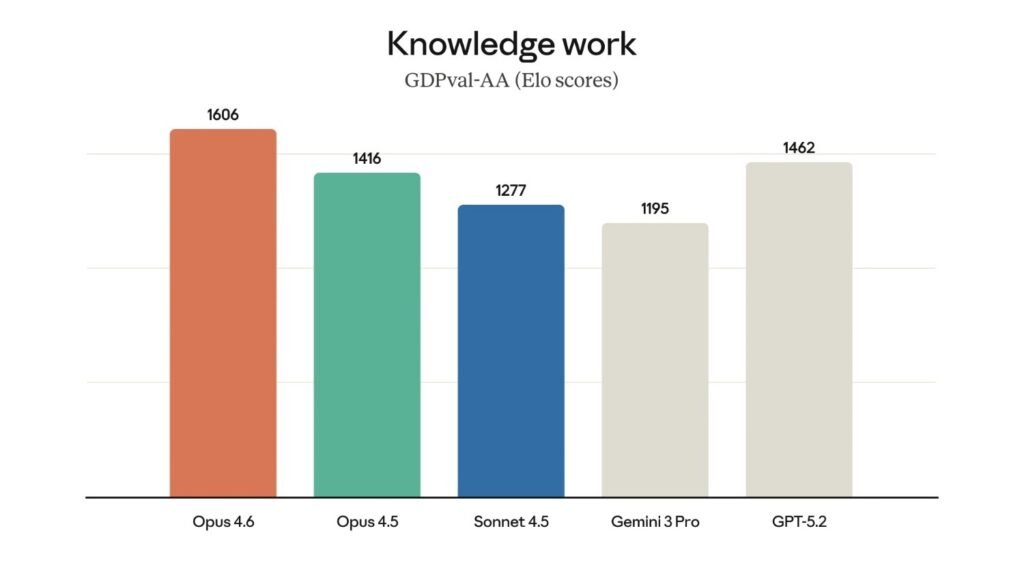
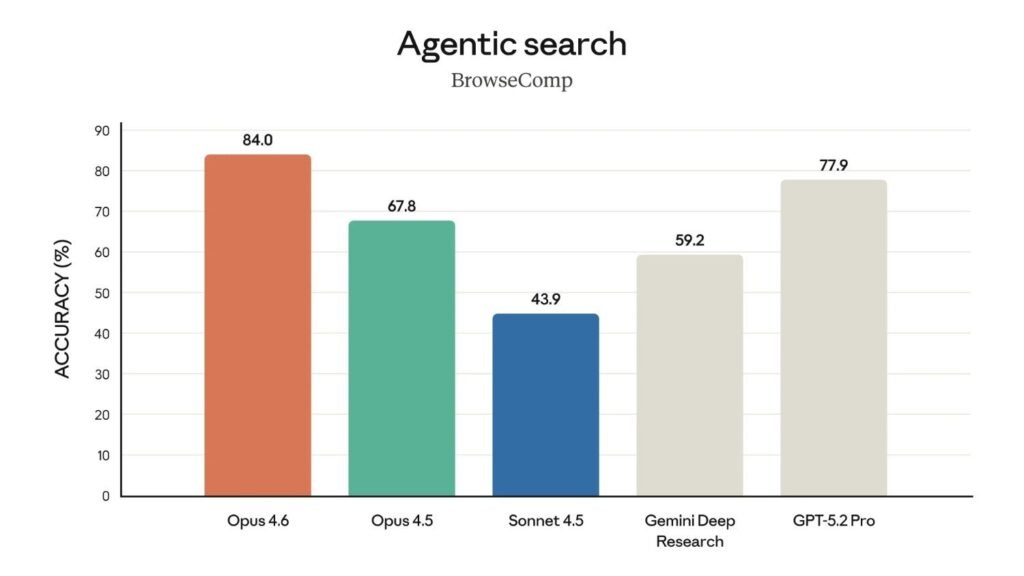
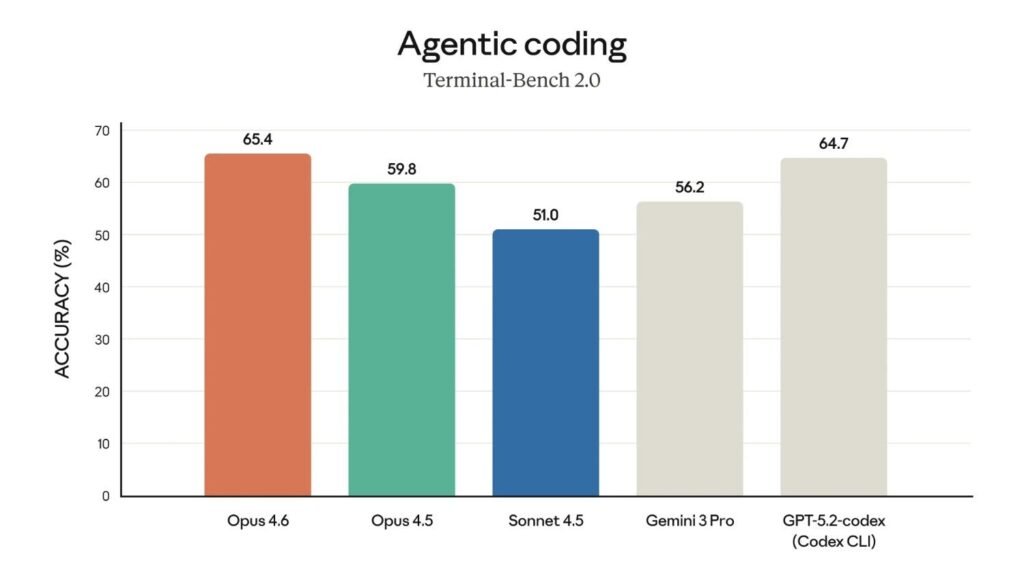
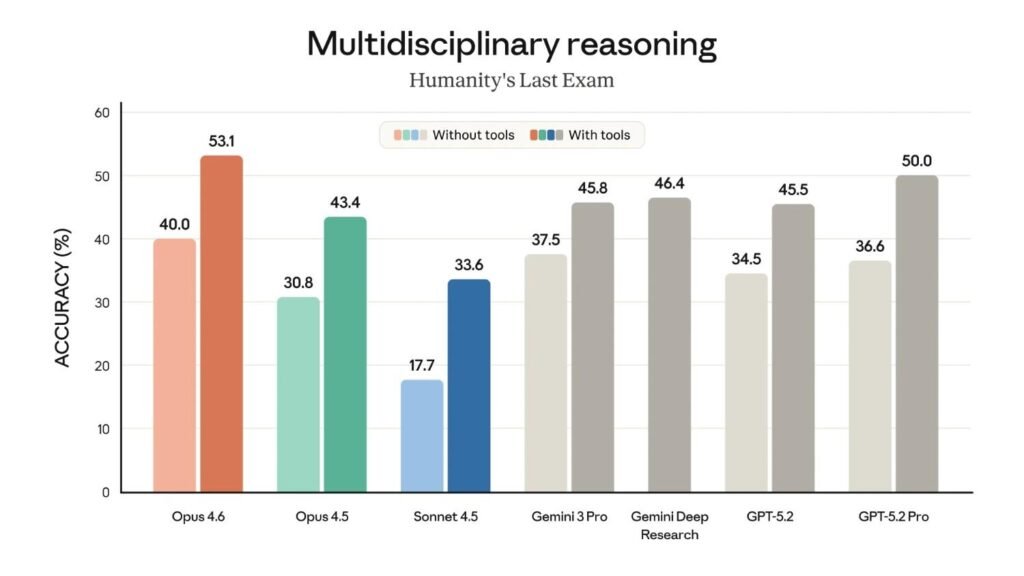
Performance on Coding, Search, and Knowledge Work Benchmarks
Anthropic positions Opus 4.6 as a top performer across benchmarks relevant to:
- Coding agents
- Search agents
- Financial and legal knowledge tasks
- Long-context retrieval
In tests where information is hidden inside extremely large text datasets (up to 1M tokens), Opus 4.6 shows a dramatic improvement in retrieving correct information without “context decay”.
The model also shows strong improvements in:
- Software root cause analysis
- Multilingual coding
- Cybersecurity scenarios
- Scientific and life sciences evaluations
Why This Model Matters for Professionals
Claude Opus 4.6 is particularly useful for:
- Developers working on large repositories
- Analysts handling financial and research documents
- Teams creating reports, presentations, and structured documents
- AI agent builders designing long-running workflows
- Organizations needing precise control over AI cost vs reasoning quality
This is an AI model designed for serious knowledge work rather than casual queries.
Key Highlights
- Supports 1M token input context and 128k token outputs
- Built for agentic, multi-step workflows
- Offers explicit reasoning depth control via effort levels
- Features adaptive thinking and context compaction
- Integrates with Claude Code, Excel, and PowerPoint
- Strong performance in coding, search, and long-context benchmarks
Final Thoughts
Claude Opus 4.6 represents a shift toward AI systems that can act as collaborators across complex tasks. With long-context understanding, structured reasoning controls, and real tool integrations, this model moves beyond chat into the realm of AI-powered work automation.
For developers, analysts, and AI builders, Opus 4.6 provides a foundation for creating workflows where AI can plan, execute, and refine tasks over time.